

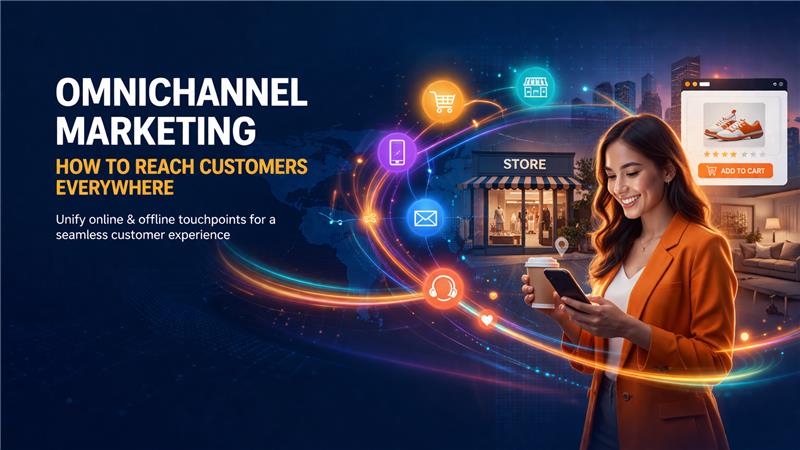
Omnichannel Marketing: How To Reach Customers Everywhere
In today’s highly interconnected world, customers don’t just interact with brands on one channel; they interact with them across channels. They may browse products on one device, review them on another, pose questions on social media, and transact in another channel altogether. This shift in consumer behavior has made omnichannel marketing an imperative, not an option.
For a business looking to stay competitive, it is crucial to offer an omnichannel experience. In this discussion, we will explore what omnichannel marketing is, its importance, and strategies to implement it.
What Is Omnichannel Marketing?
Omnichannel marketing is a strategy that integrates multiple marketing channels to create a unified and consistent customer experience. Unlike multichannel marketing, where each platform operates independently, omnichannel ensures that all channels work together.
For example, a customer might:
- Discover your brand on Instagram
- Visit your website to read a blog post
- Subscribe to your email newsletter
- Receive a personalized offer
- Complete the purchase via mobile
In an omnichannel strategy, all these interactions are connected and aligned, delivering consistent messaging and personalization.
Why Omnichannel Marketing Matters
Modern consumers expect convenience and consistency. They want brands to recognize them regardless of where they engage.
Here are a few key reasons omnichannel marketing is essential:
- Improved Customer Experience
A seamless journey builds trust. When customers receive consistent messaging across platforms, they feel more confident about your brand.
- Higher Engagement Rates
When you reach customers on their preferred platforms, engagement naturally increases.
- Increased Conversions
Personalized experiences across channels can significantly boost conversion rates.
- Stronger Brand Loyalty
Consistent and relevant interactions encourage repeat purchases and long-term relationships.
Omnichannel Vs Multichannel Marketing
Although these terms are often used interchangeably, they are different.
Multichannel marketing means using multiple platforms—like social media, email, and websites—but they may not be connected.
Omnichannel marketing, on the other hand, integrates those channels so the customer experience feels continuous and cohesive.
For example, if someone abandons a cart on your website and later sees a personalized ad reminding them about that product, that’s omnichannel in action.
Key Channels In An Omnichannel Strategy
An effective omnichannel strategy typically includes:
Website
Your website acts as the central hub. It should be mobile-friendly, fast-loading, and optimized for conversions.
Social Media
Platforms like Facebook, Instagram, LinkedIn, and Twitter allow brands to interact with audiences directly and build communities.
Email Marketing
Email remains one of the most powerful marketing channels for nurturing leads and driving repeat sales.
Paid Advertising
Google Ads, social media ads, and retargeting campaigns help reinforce your message across platforms.
SMS & Messaging Apps
Instant communication through SMS or messaging apps increases immediacy and engagement.
Offline Channels
Physical stores, events, and direct mail should align with your online messaging for a consistent brand experience.
Steps To Build A Successful Omnichannel Marketing Strategy
- Understand Your Audience
Everything starts with customer research. Identify:
- Where your audience spends time
- How they prefer to communicate
- What problems they want solved
Create detailed buyer personas to guide your messaging.
- Map the Customer Journey
Identify all possible touchpoints—from awareness to post-purchase. Ask:
- How do customers first discover your brand?
- What influences their buying decision?
- What happens after they make a purchase?
Mapping this journey helps you find gaps and opportunities.
- Centralize Customer Data
Data is the backbone of omnichannel marketing. Use CRM systems and marketing automation tools to collect and organize customer information.
When all departments have access to the same data, messaging becomes consistent and personalized.
- Maintain Consistent Branding
Your tone, visuals, and messaging should be uniform across platforms. Whether someone sees your Instagram post or visits your website, they should immediately recognize your brand.
Consistency builds familiarity—and familiarity builds trust.
- Personalize Every Interaction
Personalization goes beyond using a customer’s first name in emails. It involves:
- Product recommendations based on browsing history
- Dynamic website content
- Retargeting ads
- Location-based offers
When customers feel understood, they are more likely to convert.
- Integrate Technology and Automation
Marketing automation tools help you connect channels efficiently. For example:
- Trigger emails after a purchase
- Send cart abandonment reminders
- Schedule social media posts
- Segment audiences automatically
Automation ensures timely and relevant communication.
- Monitor and Optimize Performance
Track key performance indicators (KPIs) such as:
- Conversion rate
- Customer lifetime value
- Engagement rate
- Bounce rate
- Retention rate
Use analytics tools to evaluate what’s working and refine your strategy accordingly.
Real-World Examples Of Omnichannel Marketing
Many global brands have been successful in implementing omnichannel strategies. For example, many brands, such as Amazon, use customers’ browsing history, purchase history, and search queries to provide personalized product suggestions. Similarly, coffee shop chain Starbucks has successfully integrated its mobile application, loyalty program, and physical store experience, enabling customers to order products via the mobile application, accumulate loyalty points, and redeem them while visiting the store. Retail giant Nike has successfully connected customers’ experiences across its mobile application, website, and physical store, enabling customers to receive personalized suggestions and loyalty program benefits.
Common Challenges In Omnichannel Marketing
Despite its benefits, implementing omnichannel marketing can be complex.
Data Silos
When departments use different systems, data becomes fragmented, leading to inconsistent messaging.
Technology Integration
Connecting multiple platforms requires the right tools and expertise.
Maintaining Consistency
Ensuring uniform messaging across every channel can be challenging for large teams.
Measuring ROI
Tracking performance across multiple touchpoints requires advanced analytics.
Overcoming these challenges requires clear planning, collaboration, and the right technology stack.
Future Of Omnichannel Marketing
As the technology continues to improve, omnichannel marketing is expected to get even better. The use of artificial intelligence, predictive analytics, and machine learning is expected to improve personalization. Other technologies expected to have an impact on the future of customer interactions include voice search, augmented reality, and conversational marketing. By embracing these technologies, organizations are expected to get a competitive advantage.
FINAL THOUGHTS
Omnichannel marketing is no longer optional in a digital-first world. Customers move fluidly between devices and platforms, and they expect brands to keep up.
By understanding your audience, integrating your channels, personalizing communication, and leveraging data effectively, you can create powerful customer journeys that drive engagement and sales.
The goal is simple: meet your customers wherever they are—and provide a consistent, meaningful experience every time.
When done right, omnichannel marketing doesn’t just increase revenue. It builds lasting relationships that fuel sustainable growth.