

HOW TO BUILD A RESULT- DRIVEN DIGITAL MARKETING FUNNEL
In today’s competitive online ecosystem, running ads or posting on social media is not enough. Businesses need a structured path that guides potential customers from awareness to purchase and beyond. That structured path is called a digital marketing funnel.
A result driven digital marketing funnel is not just about generating traffic; it is about attracting the right audience, nurturing them strategically, and converting them into loyal customers. When designed properly, it becomes a predictable revenue system rather than a random marketing effort.
Let’s explore how to build a high performing, conversion focused digital marketing funnel step by step
1. UNDERSTAND WHAT A DIGITAL MARKETING FUNNEL REALLY IS
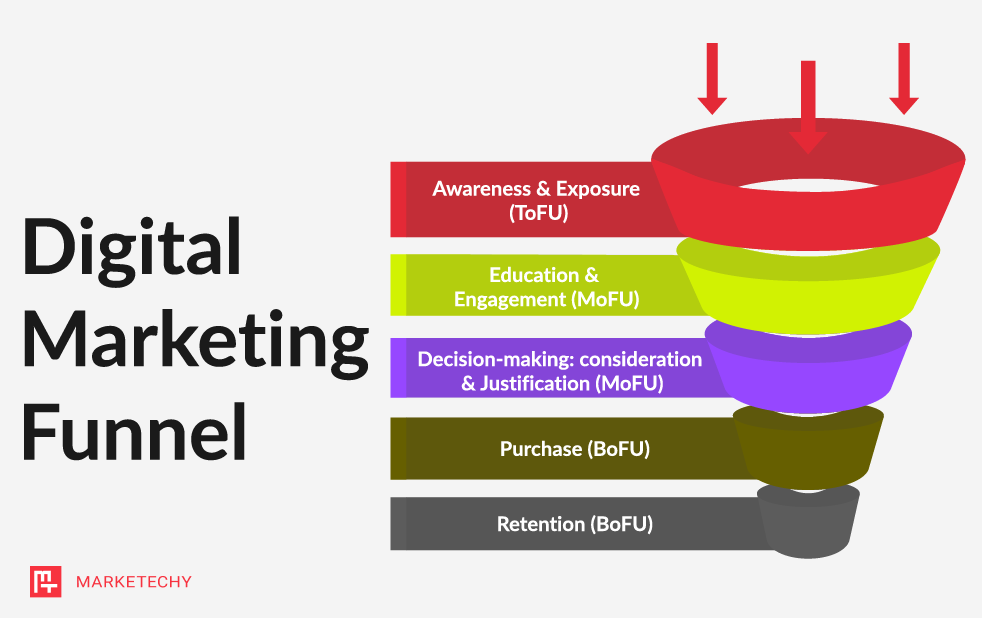
A digital marketing funnel represents the journey a potential customer takes before making a purchase. Traditionally, it is divided into three major stages:
I. Top of Funnel (TOFU) - Awareness
II. Middle of Funnel (MOFU) – Consideration
III. Bottom of Funnel – Conversion
Modern funnel also include a fourth stage:
IV. Post – Purchase – Retention and Advocacy
Each stage requires a different strategy messaging style, and content format. A major mistake businesses make is using the same message for everyone. A cold audience needs education. A warm audience needs trust. A hot audience needs a clear reason to act now.
2. START WITH CLEAR GOALS AND AUDIENCE RESEARCH
A result driven funnel begins with clarity.
Ask Yourself:
- What is the primary goal? (Leads, sales, app install consultation?)
- Who is your ideal customer?
- What problem are you solving?
- What makes your solution different?
Build detailed customer personas including:
- Age and Demographics
- Pain Points
- Buying Behavior
- Objections They May Have.
Without understanding your audience, even the best designed funnel will fail.
3. BUILD A STRONG TOP OF FUNNEL (TOFU) – AWARENESS STAGE
At the top of the funnel, your goal is visibility and attraction, not immediate sales. This is where potential customers discover your brand for the first time.
Objective:
Attract relevant traffic and build awareness.
Best Strategies:
- SEO-optimized blog content
- Social media marketing
- Educational videos and reels
- Paid ads for awareness campaigns
- Influencer collaborations
Platforms like Google and Meta help you target audiences based on interests, search behavior, and demographics.
Content That Works at TOFU:
- How-to guides
- Industry insights
- Checklists
- Short-form educational videos
- Problem-focused content
Important: Do not push for sales here. Focus on solving small problems and building authority. Your call-to-action (CTA) should be soft, such as:
- “Download the free guide”
- “Learn more”
- “Subscribe for updates”
The goal is to capture attention and move them to the next stage.
4. DEVELOP A TRUST-BUILDING MIDDLE OF FUNNEL (MOFU) – CONSIDERATION STAGE
At this stage, your audience knows they have a problem and is evaluating solutions. Now you must build trust and credibility.
Objective:
Educate, nurture, and position your brand as the best solution.
Effective Strategies:
- Email marketing sequences
- Webinars
- Case studies
- Product comparisons
- Retargeting ads
Marketing automation tools like HubSpot or Mail chimp help you segment and nurture leads with personalized messaging.
Content That Converts in MOFU:
- Detailed blog posts
- Testimonials
- Explainer videos
- Free trials
- Live demos
Address objections clearly:
- Pricing concerns
- Trust issues
- Results proof
- FAQs
This is where emotional trust meets logical validation.
5. OPTIMIZE YOUR BOTTOM OF FUNNEL (BOFU) – CONVERSION STAGE
Now your audience is ready to buy. The only question left is: Why you, and why now?
Objective:
Convert prospects into customers.
Key Elements:
- High-converting landing pages
- Strong CTA buttons
- Limited-time offers
- Money-back guarantees
- Clear value proposition
Your landing page must include:
- Clear headline
- Benefits (not just features)
- Social proof
- Testimonials
- Simple checkout process
Remove friction:
- Reduce form fields
- Offer multiple payment options
- Provide live chat support
Use urgency and scarcity strategically:
- “Limited seats available”
- “Offer ends tonight”
- “Only 3 spots left”
Small tweaks here can dramatically improve revenue.
6. DON’T IGNORE POST-PURCHASE – RETENTION & ADVOCACY
Many businesses stop marketing after the sale. That is a mistake.
Acquiring a new customer costs more than retaining one
Objective:
Turn customers into repeat buyers and brand advocates.
Strategies:
- On boarding email sequences
- Loyalty programs
- Referral incentives
- Up sell and cross-sell offers
- Customer feedback surveys
Encourage reviews and user-generated content. Happy customers become your strongest marketing asset.
Retention increases:
- Customer lifetime value (CLV)
- Brand trust
- Organic referrals
- Predictable revenue
7. INTEGRATE AUTOMATION AND TRACKING
A result-driven funnel is data-driven.
Track metrics at every stage:
TOFU Metrics:
- Website traffic
- Click-through rate (CTR)
- Engagement rate
MOFU Metrics:
- Email open rates
- Lead conversion rate
- Cost per lead
BOFU Metrics:
- Conversion rate
- Cost per acquisition (CPA)
- Return on ad spend (ROAS)
Use analytics tools such as Google Analytics to understand user behavior and optimize continuously.
Test:
- Headlines
- CTA placements
- Ad creatives
- Pricing structures
Optimization is not optional — it is continuous.
8. ALIGN CONTENT, ADS, AND SALES
A common reason funnels fail is misalignment.
Your:
- Ad message
- Landing page copy
- Email sequence
- Sales pitch
Must communicate the same core promise
Consistency builds trust. Confusion kills conversions.
9. SIMPLIFY THE CUSTOMER JOURNEY
Complex funnels reduce performance.
Avoid:
- Too many redirects
- Confusing navigation
- Overwhelming information
- Long checkout processes
Make every step intentional and friction-free.
Ask yourself
“Is this step necessary for conversion?”
If not, remove it.
10. BUILD FOR SCALE
Once your funnel works, scale it strategically.
You can:
- Increase ad budget
- Expand targeting
- Add new acquisition channels
- Repurpose high-performing content
But scaling without a proven funnel leads to wasted spends.
First optimize. Then amplify.
FINAL THOUGHTS
A performance-driven digital marketing funnel is not about creating random traffic or making sporadic sales; instead, it is about creating a systematic and planned approach to building the right audience, trust at each step, and retaining customers for a lifetime. When done correctly, the funnel becomes a predictable revenue stream and not a guessing game for marketers. The key to success lies in having a clear understanding of the goals, consistency in messaging, continuous optimization, and a thorough understanding of the customer’s journey. In digital marketing, it’s not about being everywhere but about leading the right people down the right path at the right time.