
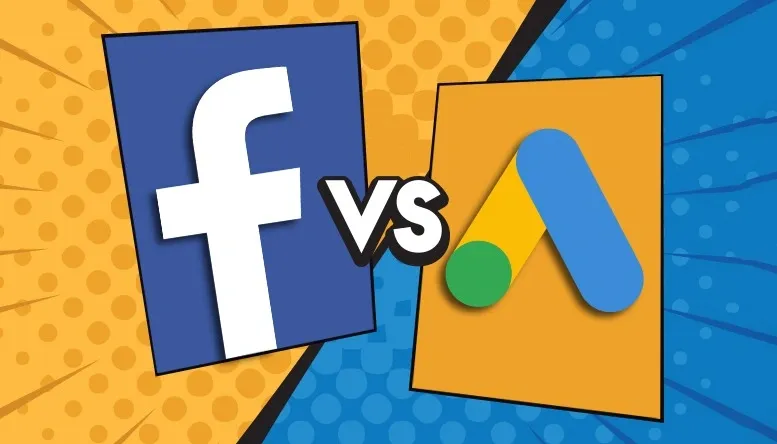
GOOGLE ADS VS. FACEBOOK ADS: WHICH IS BETTER FOR YOUR BUSINESS?
In the current competitive digital market, advertising is one of the essential building blocks of business expansion. Among the two most prominent platforms for online advertising, Google Ads and Facebook Ads are the most dominant. Both of these platforms are equipped with the most effective tools to reach your targeted audience, but they function in two vastly different ways and are designed to help you achieve two different sets of marketing goals. Therefore, when making a choice between the two, which one is actually more appropriate for your business?
The honest answer is that it depends on your business goals, your targeted audience, your budget, and the type of products or services that you are offering. Let us take a look at the benefits, differences, and appropriate uses of both platforms so that you can make a well-informed decision.
WHAT ARE GOOGLE ADS AND FACEBOOK ADS?
Google Ads: Intent-Driven Advertising
Google Ads is a pay-per-click (PPC) advertising platform that shows advertisements on Google’s search engine result pages (SERPs), YouTube, and its partner sites. Google Ads allows businesses to place bids on keywords so that their advertisements show up when users search for certain keywords.
Think of Google Ads as a way to catch users who are actively looking for something—whether it is a product, service, answer, or solution.
Facebook Ads: Interest-Driven Social Advertising
Facebook Ads (Meta Ads) runs on Facebook, Instagram, Messenger, and the Audience Network. Instead of targeting users based on search behavior, it targets users based on their behavior, interests, demographics, and engagement patterns.
This makes Facebook Ads an ideal platform for brands that want to build awareness, generate interest, and engage users who may not yet be aware of the need for the product.
KEY DIFFERENCES: GOOGLE ADS VS FACEBOOK ADS
FEATURE
| GOOGLE ADS | FACEBOOK ADS |
User Intent
|
High — users searching for answers or buying
|
Lower — users passively browsing
|
Best For
|
Demand capture
|
Demand generation
|
Targeting
|
Keywords, location, device, audience lists
|
Interests, demographics, behaviors, custom audiences
|
Ad Formats
|
Text ads, Display, Shopping, Video
|
Image, Video, Carousel, Stories, Collection
|
Cost Model
|
Cost-per-click (CPC), CPA, impression
|
CPC, CPM, CPA
|
Ideal For
|
Direct response & conversions
|
Branding & engagement
|
ADVANTAGES OF GOOGLE ADS
1. Captures Active Demand
People using Google are often searching with specific intent — like “buy running shoes online” or “best SEO agency near me.” When your ad shows up here, it’s shown to someone already interested in that topic.
2. Measurable Conversions
Google has a robust tracking system that allows advertisers to see not just clicks, but actual conversions — such as purchases, form fills, calls, or downloads.
3. Wide Reach Across the Web
Google isn’t just search. It includes the Display Network spanning millions of websites, and YouTube, the world’s second-largest search platform. This reaches users beyond search queries.
4. High ROI for Intent-Driven Traffic
Because users have active intent, Google Ads often delivers higher conversion rates, especially for service-based and ecommerce businesses.
ADVANTAGES OF FACEBOOK ADS
1. Advanced Audience Targeting
Facebook knows a lot about its users — interests, behaviors, pages liked, engagement history — giving advertisers rich targeting options that go beyond keywords.
2. Ideal for Awareness & Engagement
If your objective is to build brand awareness, tell your story, or nurture leads, Facebook Ads shines. It helps you reach users who may not yet know they need your product or service.
3. Highly Visual & Creative
Facebook ad formats let you use engaging media — videos, carousel images, animated GIFs, and story ads — which can be more effective for telling a brand story.
4. Retargeting Is Powerful
With Face book’s Pixel installed on your website, you can retarget users who visited pages but didn’t convert — reminding them of your offer across Facebook and Instagram.
WHEN TO USE GOOGLE ADS
1. You Want Immediate Conversions
Google Ads are excellent when you want to capture users who are ready to buy or take a specific action.
Examples:
- Someone searching “emergency plumber near me”
- A user searching “discount running shoes size 9”
- Someone looking “best CRM software for small business”
In these scenarios, ads can appear at the moment of intent, increasing the likelihood of conversions.
2. Your Product or Service Solves a Problem
When users know they have a problem and search for solutions, Google Ads allow your business to be front-and-center with relevant messaging.
WHEN TO USE FACEBOOK ADS
1. You Want to Build Awareness
If your brand is new, launching a product, or entering a new market, Facebook Ads can generate initial interest and engagement.
2. You Have a Visual Product
Products like clothing, accessories, home decor, and lifestyle brands perform well with Face book’s dynamic ad formats.
3. You Want to Retarget or Nurture Leads
Facebook excels in building audience segments and nurturing them through the funnel with sequential messaging.
COST CONSIDERATIONS
Both platforms operate on bidding systems, and cost will vary by industry, competition, and audience.
Google Ads Costs
- Competitive keywords can be expensive.
- Search ads often have higher CPC, but they convert more consistently due to intent-based targeting.
Facebook Ads Costs
- Generally lower CPC compared to Google Search.
- But lower intent can mean lower conversion rates — so you’ll need strong creatives and audience segmentation to maximize ROI.
Budget Tip: Start with a modest budget on both platforms, analyze results, and channel more spend into the platform delivering better ROI.
WHICH SHOULD YOU CHOOSE?
When deciding between Google Ads and Facebook Ads, the right choice depends on your business goals. Google Ads is the better option if your objective is direct conversions, capturing customers with active intent, or promoting services and products that people are already searching for. It allows you to appear exactly when potential customers are looking for a solution, making it highly effective for lead generation and sales. In contrast, Facebook Ads is more suitable if your goal is brand awareness or engagement, targeting audiences based on interests and behaviors, or promoting products that rely heavily on visual storytelling. However, for most businesses, the most effective strategy is not choosing one over the other but using both together. Facebook Ads can help build awareness, grow your audience, and retarget users who engage with your brand, while Google Ads can capture those users when they are ready to convert. This creates a complete marketing funnel—starting with awareness on Facebook, nurturing interest through retargeting, and driving final conversions through Google Search—resulting in a more strategic and sustainable advertising approach.
HOW TO DECIDE FOR YOUR BUSINESS
To decide which advertising platform is right for your business, start by clearly defining your goals—whether you are aiming for sales, leads, website traffic, brand visibility, or app installs. Your objective will heavily influence whether Google Ads or Facebook Ads is more suitable. Next, understand your audience by identifying where they spend most of their time and how they behave online. Are they actively searching for solutions on search engines, or are they browsing social platforms and discovering new brands? Once you have clarity on goals and audience behavior, test both platforms by running small, controlled campaigns. Track important performance metrics such as click-through rate (CTR), cost per click (CPC), conversion rate, and return on ad spend (ROAS) to evaluate effectiveness. Finally, optimize and scale based on performance data—invest more budget into campaigns that are delivering strong results while refining or reallocating spend from underperforming ones. This data-driven approach ensures you make informed decisions rather than relying on assumptions.
FINAL CONCLUSION
The Google Ads vs. Facebook Ads discussion does not present a winner that applies universally, as both tools have different uses in the online marketing landscape. Google Ads is best for meeting demand with high levels of intent, while Facebook Ads is best for creating interest and building brand engagement. Instead of choosing one over the other, smart marketers combine both tools in a single marketing strategy—engaging awareness at the top of the funnel and converting leads at the bottom. Whether running a small business or a large corporation, a sound understanding of the strengths of both tools helps make informed decisions about budget allocation, targeting, and growth.