

On-Page vs. Off-Page SEO: What Matters More in 2026?
The world of search engine optimization is constantly changing, and in 2026, the debate continues: Is on-page SEO more important, or does off-page SEO rank higher?
With the constant updates from Google and the growing power of AI search experiences, SEO is no longer about individual strategies. It is about building authority, trust, relevance, and satisfaction across various touchpoints.
As a business owner, blogger, or marketer explaining their plan for 2026, this article will help you understand where to focus your efforts and how to strike a balance between both.
WHAT IS ON-PAGE SEO?
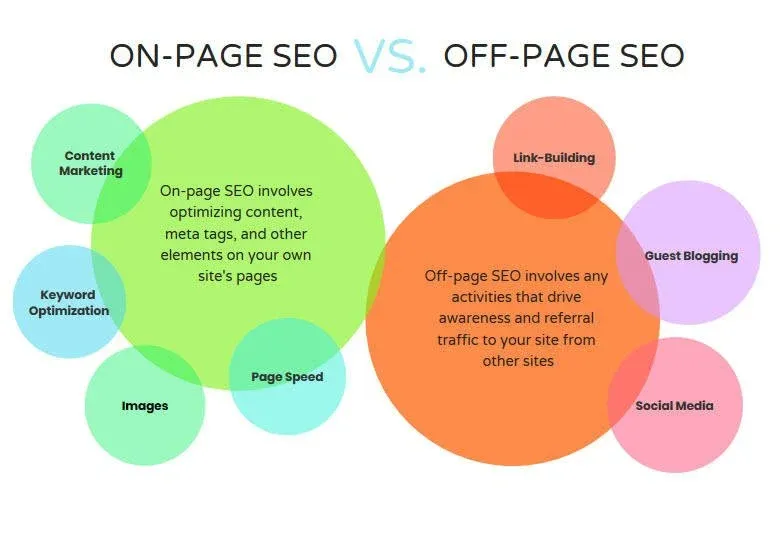
On-page SEO refers to all the optimization efforts made within your website to improve search visibility and user experience.
It includes:
- Keyword research and placement
- High-quality content creation
- Title tags and meta descriptions
- Internal linking
- URL structure
- Image optimization
- Page speed optimization
- Mobile responsiveness
- User experience (UX) enhancements
In simple terms, on-page SEO ensures your website is technically sound and content-rich so that search engines can understand it easily.
WHY ON-PAGE SEO IS CRUCIAL IN 2026
Search engines in 2026 are powered by advanced AI models that prioritize intent, context, and user satisfaction over keyword stuffing. Algorithms now evaluate:
- Content depth and originality
- Search intent alignment
- Engagement signals
- Semantic relevance
- Page experience
If your content does not fully answer the user’s query, it will struggle to rank — regardless of back links.
With AI-powered search results and conversational search becoming mainstream, search engines are focusing heavily on:
- Expertise
- Authority
- Trustworthiness
- Experience
This means your content must demonstrate credibility, not just optimization.
On-page SEO is no longer about inserting keywords. It is about building topic authority and delivering exceptional value.
WHAT IS OFF-PAGE SEO?
Off-page SEO refers to activities performed outside your website to improve your site’s authority and reputation.
The most common off-page factors include:
- Back links from authoritative websites
- Brand mentions
- Social signals
- Digital PR
- Guest blogging
- Influencer collaborations
- Online reviews
Back links remain a strong ranking factor because they act as votes of confidence. When credible websites link to your content, search engines interpret it as a sign of trust and relevance.
WHY OFF-PAGE SEO STILL MATTERS IN 2026
Despite algorithm advancements, back links are not dead.
Search engines still rely on external validation to determine:
- Domain authority
- Content credibility
- Brand reputation
- Industry relevance
However, the quality standard has dramatically increased. Spammy links, irrelevant guest posts, and automated link schemes are penalized quickly.
In 2026, off-page SEO is more about authority building than link building.
A single back link from a high-authority publication carries far more weight than dozens of low-quality directory links.
THE BIG QUESTION: WHICH MATTERS MORE IN 2026?
The honest answer: On-page SEO comes first. Off-page SEO amplifies it.
Here’s why.
1. Without Strong On-Page SEO, Off-Page Efforts Fail
Imagine building back links to a poorly optimized page:
- Weak content
- Slow loading speed
- Poor structure
- Thin information
Even if you gain back links, users will leave quickly. High bounce rates and low engagement will signal poor quality to search engines.
In 2026, user behavior metrics matter more than ever. If your content does not satisfy visitors, rankings drop — regardless of links.
On-page SEO builds the foundation.
2. Off-Page SEO Builds Authority and Trust
Once your content is high-quality, off-page SEO accelerates growth.
Search engines need external proof that your website is trustworthy. That validation comes from:
- Mentions in reputable publications
- Organic back links
- Brand searches
- Social engagement
If two websites publish equally strong content, the one with stronger authority signals usually ranks higher.
Off-page SEO gives you competitive leverage.
THE ROLE OF AI AND SEARCH EVOLUTION IN 2026
Search behavior is changing rapidly due to AI integration in search engines.
With conversational AI results and contextual summaries becoming common, search engines are focusing on:
- Structured data
- Topical clusters
- Clear semantic relationships
- Author credibility
- Brand strength
Websites that rely only on back links but lack structured, helpful content are losing visibility.
Similarly, websites with excellent content but zero authority struggle to outrank established competitors.
The winning strategy in 2026 is integration.
ON-PAGE SEO TRENDS DOMINATING 2026
Here are key on-page priorities this year:
1. Search Intent Optimization
Understanding what users truly want is more important than targeting high-volume keywords.
2. Content Depth over Content Length
Long content does not guarantee rankings. Comprehensive, well-structured answers do.
3. Topical Authority
Instead of isolated articles, search engines favor topic clusters that show expertise.
4. UX and Core Web Vitals
Fast loading speed, responsive design, and intuitive navigation directly impact rankings.
5. Internal Linking Strategy
A smart internal linking structure helps search engines understand content relationships.
OFF-PAGE SEO TRENDS DOMINATING 2026
Here is what works in off-page SEO now:
1. Digital PR
Earning coverage from reputable media outlets strengthens brand authority.
2. Thought Leadership
Publishing expert insights and industry research naturally attracts backlinks.
3. Brand Building
Branded searches are increasing. Search engines interpret strong brand recognition as trust.
4. Quality over Quantity
Five authoritative back links outperform fifty low-quality ones.
5. Community Engagement
Forums, niche communities, and social discussions increase visibility and credibility.
SO, WHAT SHOULD YOU FOCUS ON?
If you are starting a new website in 2026:
- Prioritize on-page SEO first.
- Create high-value, intent-driven content.
- Optimize technical performance.
- Build topical clusters.
- Then invest in strategic off-page SEO.
If you already have optimized content but low authority:
- Focus on digital PR.
- Build high-quality back links.
- Strengthen your brand presence.
Think of it this way:
On-page SEO builds your house.
Off-page SEO builds your reputation.
You need both to win.
FINAL VERDICT: WHAT MATTERS MORE?
In 2026, on-page SEO is the foundation, but off-page SEO determines competitive advantage.
You cannot rely on one alone.
Search engines are smarter, users are more demanding, and competition is tougher than ever.
Success now depends on:
- Valuable content
- Technical excellence
- Authority building
- Consistency
- Strategic promotion
If a choice must be made, start with on-page SEO.
However, to get leading rankings, use both methods in a strategic combination.
Because modern SEO is not about individual strategies—it is about building a holistic system that gains the trust of search engines and the love of users.