

December Solstice: A Complete Guide to the Shortest Day of the Year
Introduction to the December Solstice
The December Solstice is one of those quiet yet powerful moments in the year that often slips by unnoticed, even though it affects every living thing on Earth. It marks the shortest day and the longest night of the year in the Northern Hemisphere, while simultaneously bringing the longest day to the Southern Hemisphere. In simple terms, this is the turning point where darkness reaches its peak and light slowly begins to return. Think of it like the deepest inhale before a long, hopeful exhale.
What makes the December Solstice so fascinating is that it’s not just a scientific event—it’s deeply human. Long before calendars, clocks, and smartphones, people looked to the sky to understand time, seasons, and survival. The solstice told them when winter had truly arrived, when food would be scarce, and when the sun would begin its gradual comeback. Even today, whether you realize it or not, the solstice shapes your sleep patterns, mood, energy levels, and connection to nature.
In a world that rarely slows down, the December Solstice quietly invites us to pause. It’s a reminder that cycles exist for a reason. Darkness isn’t the enemy—it’s part of the rhythm. And without this moment of stillness and shadow, the return of light wouldn’t feel nearly as meaningful.
The Science Behind the December Solstice
Earth’s Tilt and Orbit Explained
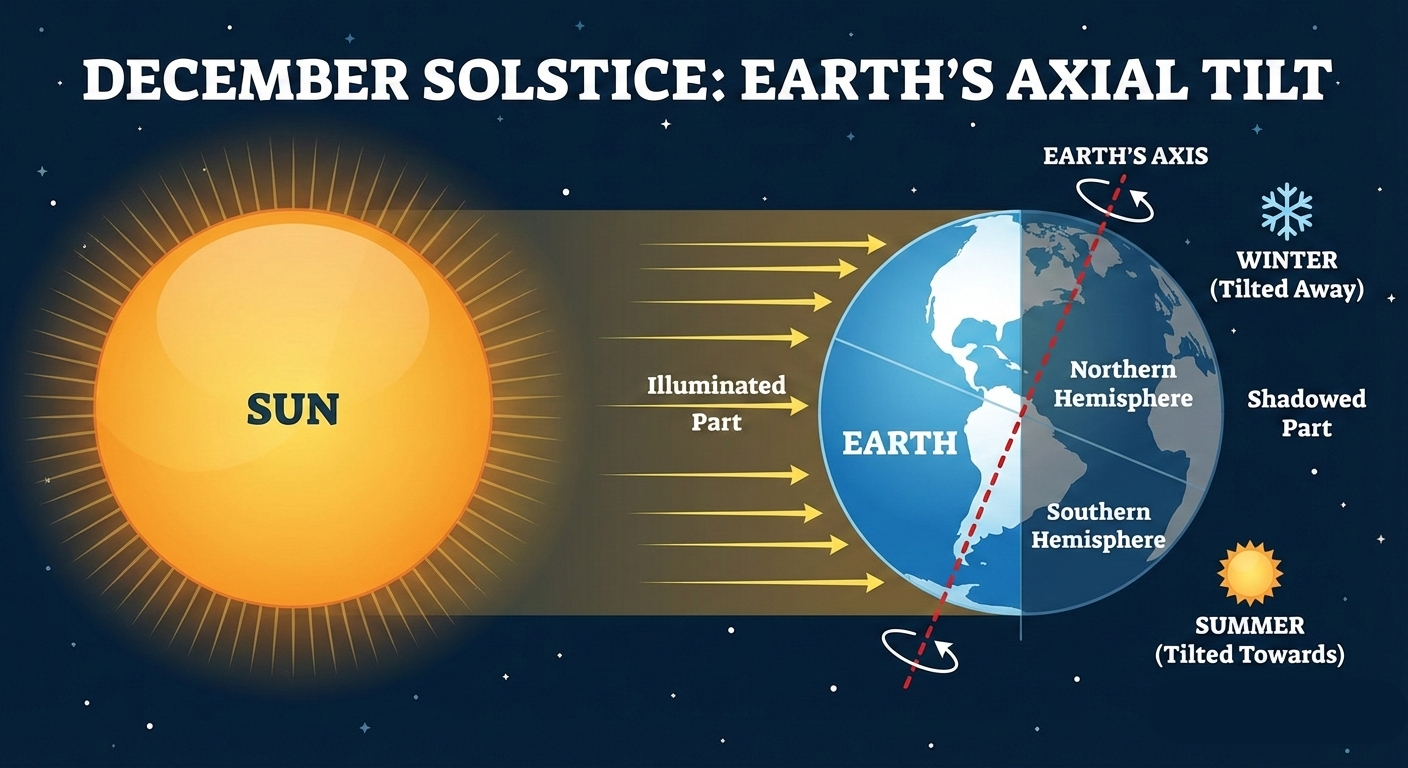
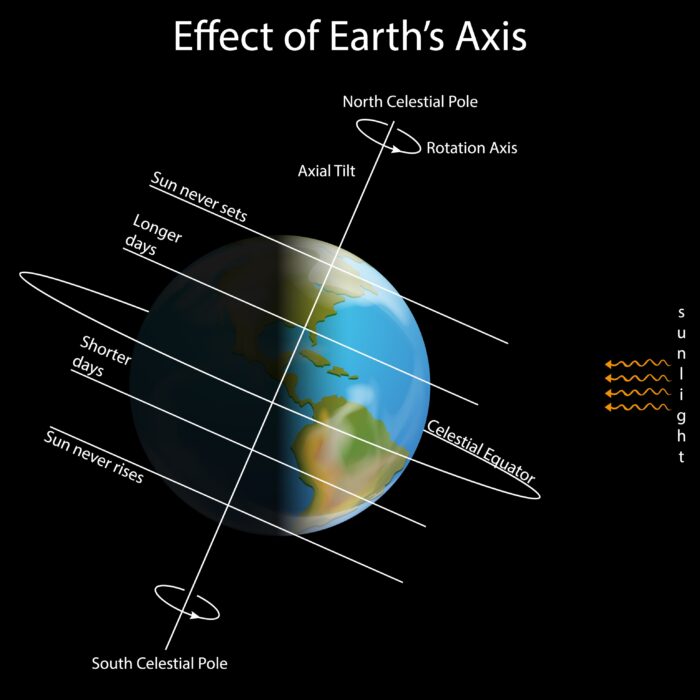
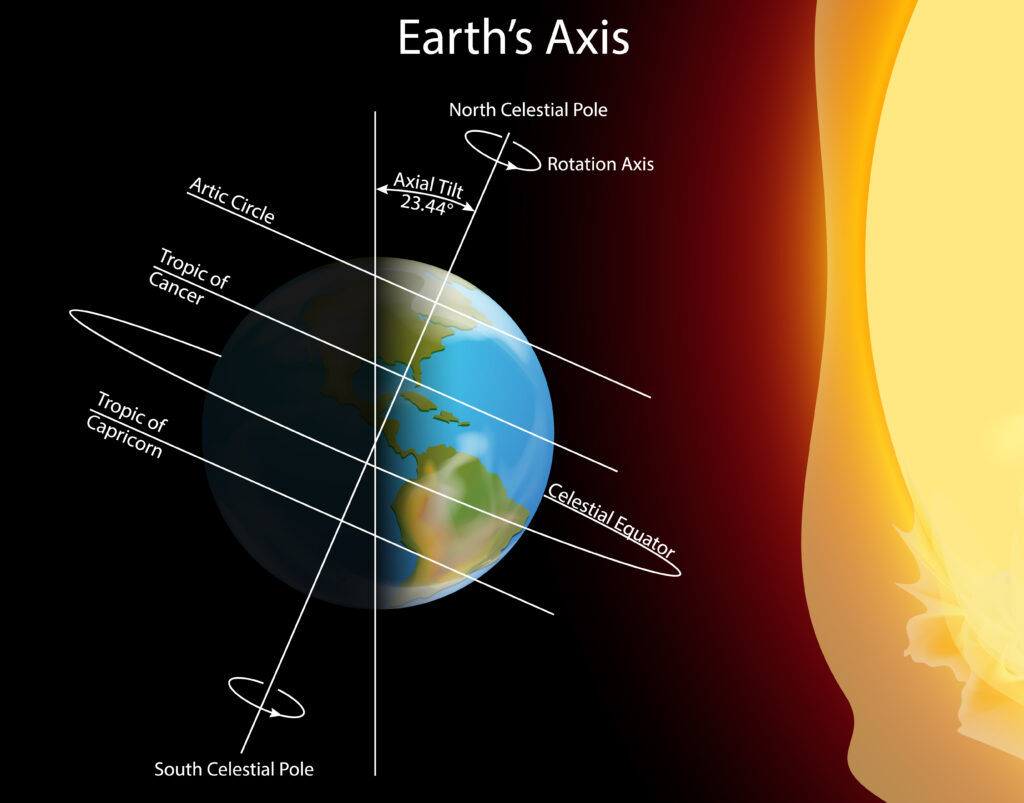
To really understand the December Solstice, you have to picture Earth not as a perfectly upright spinning ball, but as a slightly tilted one—about 23.5 degrees, to be exact. This tilt is the unsung hero behind all seasons. As Earth orbits the sun, different parts of the planet receive varying amounts of sunlight depending on how they’re angled toward or away from the sun.
During the December Solstice, the Northern Hemisphere is tilted the farthest away from the sun. This means sunlight hits it at a lower angle, spreading the energy over a larger area and making it less intense. Less intensity equals colder temperatures and shorter daylight hours. Meanwhile, the Southern Hemisphere is soaking up the sun, experiencing summer in full swing.
What’s wild is that Earth’s distance from the sun has very little to do with this. In fact, Earth is often closer to the sun during Northern Hemisphere winter. It’s the tilt—not proximity—that controls the seasons. Once you grasp that, the solstice stops feeling mysterious and starts feeling beautifully precise, like a perfectly timed cosmic dance.
Why the Sun Appears Lower in the Sky
Have you ever noticed how the winter sun seems shy, barely climbing above the horizon before dipping back down again? That’s another direct result of Earth’s tilt. During the December Solstice, the sun follows its shortest and lowest path across the sky in the Northern Hemisphere.
Because the sun stays low, its rays travel through more of Earth’s atmosphere before reaching the ground. This scatters the light and reduces warmth, giving winter days that pale, silvery glow. It’s also why shadows look longer and sunsets feel more dramatic during this time of year.
This low solar arc isn’t just a visual change—it affects everything from how quickly ice melts to how plants photosynthesize. It even influences architecture and city planning in colder regions. The sun’s position may feel subtle, but its impact is anything but small.
When Does the December Solstice Occur?
Exact Dates and Times
The December Solstice usually falls between December 20 and December 22 each year. Most commonly, it occurs on December 21, but the exact date and time depend on your time zone and Earth’s precise orbital position.
Unlike holidays fixed to a calendar date, the solstice is a real-time astronomical event. It happens at a specific moment when the sun reaches its southernmost point in the sky. That moment might occur late at night in one country and early morning in another, which is why solstice dates can vary around the globe.
This exactness is part of what makes the solstice special. It’s not an abstract idea—it’s a measurable, observable event that happens whether we’re paying attention or not.
Why the Date Slightly Changes Each Year
If Earth’s orbit were perfectly neat and our calendar perfectly aligned, the solstice would happen on the same day every year. But reality, as always, is messier. Earth takes about 365.2422 days to orbit the sun, which is why we need leap years.
That extra fraction of a day adds up, causing the solstice to shift slightly each year. Leap years help correct this drift, pulling the solstice back into alignment. It’s a subtle reminder that even our systems of timekeeping are attempts to keep pace with the universe—not the other way around.
December Solstice in the Northern Hemisphere
The Shortest Day and Longest Night
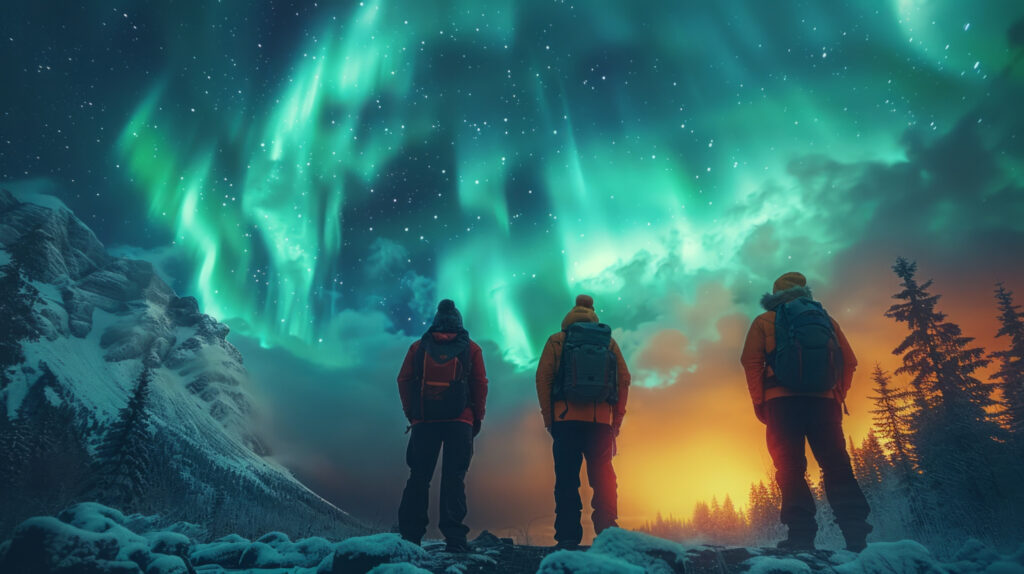
In the Northern Hemisphere, the December Solstice delivers the shortest stretch of daylight all year. Depending on your latitude, daylight might last only a few hours—or barely appear at all near the Arctic Circle.
This lack of sunlight can feel heavy. Mornings are dark, evenings arrive too soon, and energy levels often dip. But there’s also something strangely comforting about it. The world feels quieter, slower, more introspective. It’s like nature itself is encouraging us to rest.
From this point forward, each day gains a little more light. It’s almost imperceptible at first, but symbolically powerful. The solstice isn’t just about darkness—it’s about the promise of return.
Weather Patterns and Seasonal Shifts
Meteorologically, winter may not feel fully established everywhere by the solstice, but astronomically, winter officially begins on this day. Cold air masses strengthen, snow becomes more likely, and ecosystems shift into survival mode.
Animals adapt by hibernating or growing thicker coats. Plants conserve energy. Humans, too, instinctively slow down, even if modern life doesn’t always allow it. The solstice marks this seasonal pivot, reminding us that rest is not laziness—it’s preparation.
December Solstice in the Southern Hemisphere
The Longest Day of the Year
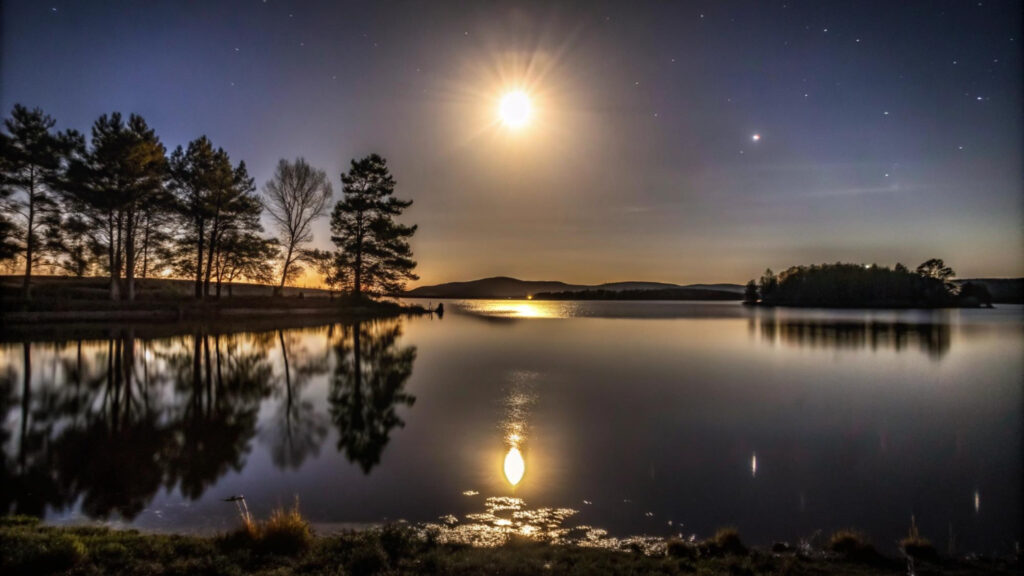
While the Northern Hemisphere is wrapped in darkness, the Southern Hemisphere experiences the opposite. The December Solstice brings the longest day and shortest night, with the sun reaching its highest point in the sky.
This abundance of light fuels growth, warmth, and activity. Crops thrive, beaches fill, and outdoor life feels effortless. It’s summer at its peak, driven by the same astronomical mechanics that create winter elsewhere.
The beauty of the solstice lies in this balance—two completely different experiences, perfectly synchronized by Earth’s tilt.
Seasonal Celebrations and Activities
In many Southern Hemisphere countries, the solstice aligns with summer holidays, festivals, and school breaks. Life spills outdoors, and long evenings invite connection and celebration.
Even though the solstice may not always be named or ritualized, it’s felt. Light has a way of shaping joy, energy, and movement, just as darkness shapes rest and reflection.
Cultural and Historical Significance of the December Solstice
Long before modern science explained the mechanics of Earth’s tilt and orbit, ancient civilizations already understood one crucial truth: the December Solstice mattered. It wasn’t just another day on the calendar—it was a survival marker. For early humans, this moment signaled that the worst of winter was arriving, but also that the days would soon begin to grow longer again. In a world without electric light, that promise of returning sunlight meant hope, warmth, and life itself.
Ancient cultures across continents built monuments aligned precisely with the solstice. Stonehenge in England is perhaps the most famous example, with its massive stones arranged to frame the sun’s movement during key solar events. In ancient Egypt, temples were designed so sunlight would illuminate specific statues only on solstice days. The Maya tracked solar cycles with astonishing accuracy, integrating the solstice into their calendars and spiritual beliefs. These weren’t coincidences—they were deliberate acts of reverence for the sun.
What’s fascinating is how universal this respect was. Societies that never contacted one another still arrived at similar conclusions: the sun governs time, food, and fate. The December Solstice represented both fear and faith—the fear of darkness and cold, and the faith that light would return. Even today, when heating systems and artificial lighting protect us from winter’s harshest effects, that ancient emotional imprint still lingers beneath the surface.
Why Ancient People Tracked the Solstice
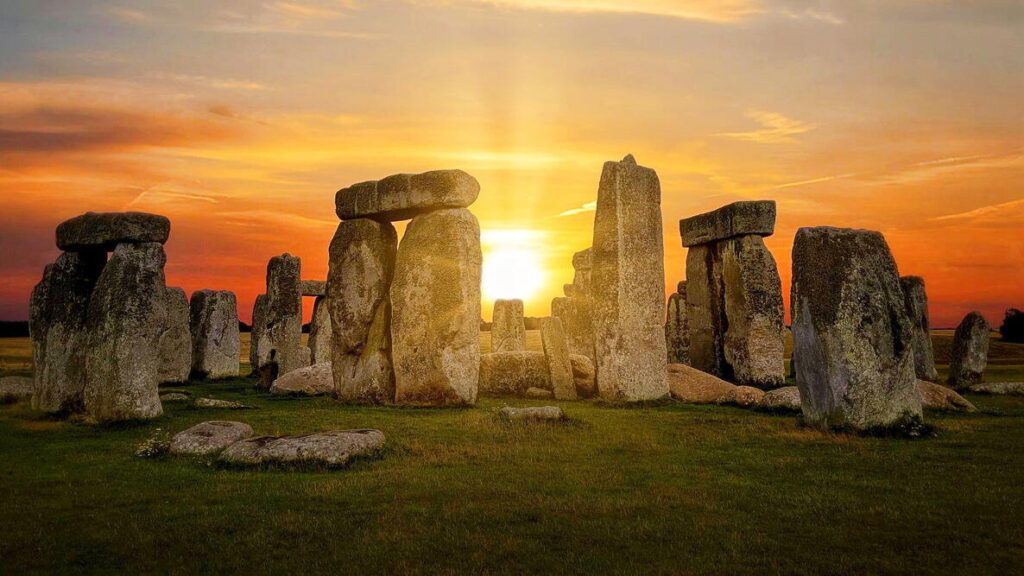
Tracking the solstice was about far more than curiosity—it was about survival. Early agricultural societies depended on knowing exactly when to plant and harvest crops. The solstice helped them mark the turning points of the year with reliability when written calendars didn’t exist. By observing the sun’s position, they could predict seasonal changes and prepare accordingly.
The solstice also played a vital role in social organization. Festivals were timed around it, reinforcing community bonds during the hardest months of the year. When food was scarce and nights were long, coming together wasn’t just comforting—it was necessary. Shared rituals around fire, storytelling, and feasting helped people endure winter’s challenges both physically and emotionally.
In many ways, the solstice was an early form of timekeeping, spirituality, and science rolled into one. It connected humans to the cosmos, reminding them that their lives were part of a larger, repeating pattern. That sense of cosmic belonging is something many people still seek today, even if they no longer watch the sun with the same intensity.
December Solstice and Pagan Traditions

Yule and Winter Festivals
One of the most well-known pagan celebrations connected to the December Solstice is Yule. Originating in Northern Europe, Yule was a midwinter festival honoring the rebirth of the sun. As darkness reached its peak, people lit fires and candles to symbolize the sun’s return. The message was clear: light would overcome darkness.
Yule celebrations often lasted several days and included feasting, singing, and rituals meant to invite prosperity and protection. Evergreens played a central role because they stayed alive during winter, symbolizing resilience and continuity. Holly, mistletoe, pine, and fir weren’t just decorations—they were sacred symbols of life persisting through hardship.
The famous Yule log was burned slowly, representing warmth, hope, and the sun’s growing strength. Families believed the fire could ward off evil and bring good fortune in the year ahead. While modern celebrations may look different, the emotional core of Yule—hope, warmth, and renewal—remains deeply relatable.
Symbols That Shaped Modern Holidays
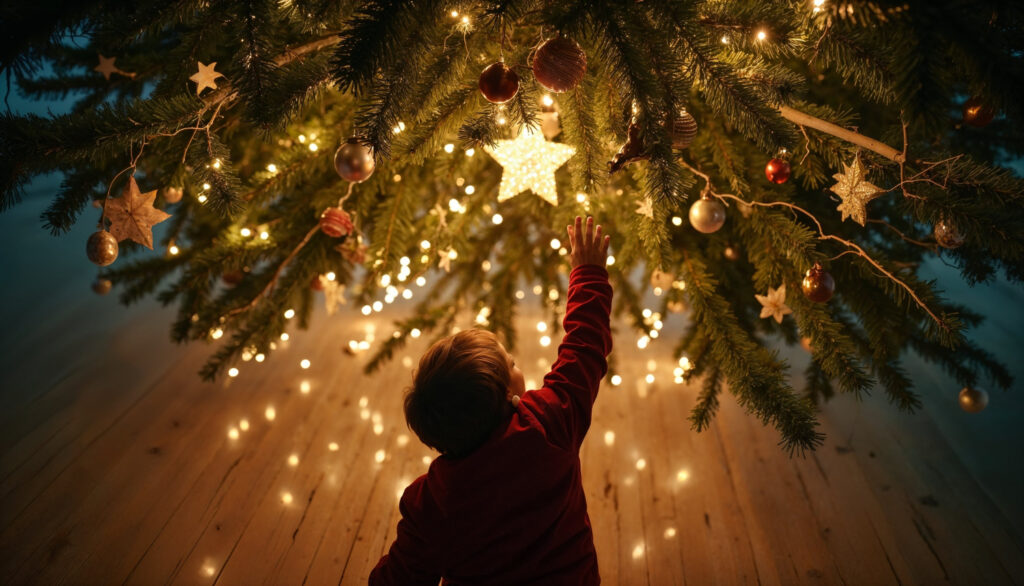
Many symbols we associate with modern winter holidays can be traced directly back to solstice traditions. Decorating trees, lighting candles, and exchanging gifts all have roots in ancient solstice rituals. These practices weren’t about excess or consumerism—they were acts of meaning.
Candles represented the sun’s return. Wreaths symbolized the eternal cycle of life. Gift-giving reinforced social bonds during a time when cooperation was essential for survival. Over time, these traditions were absorbed into newer religious and cultural celebrations, evolving but never fully losing their original purpose.
Understanding these origins doesn’t diminish modern holidays—it enriches them. It reveals that beneath the layers of tradition lies a shared human desire to find light, connection, and meaning during the darkest time of the year.
The December Solstice and Christmas
Connections Between the Solstice and Christmas
While Christmas is a religious holiday with its own theology, its timing and many of its customs align closely with ancient solstice celebrations. Early Christian leaders strategically placed Christmas near the December Solstice, making it easier for pagan communities to adopt the new faith without abandoning familiar traditions.
This blending of beliefs created a powerful narrative: the birth of light during darkness. Whether interpreted spiritually or symbolically, the message resonated deeply with people living through long, cold winters. Light, hope, and renewal became central themes shared by both traditions.
Rather than replacing solstice traditions, Christmas absorbed and transformed them. This cultural layering is one reason winter holidays feel so emotionally rich—they speak to something ancient and universal within us.
Light as a Universal Theme
Across cultures and religions, light represents knowledge, hope, and life. During the December Solstice, this symbolism becomes especially potent. When nights are longest, even a small flame feels powerful.
Modern light displays, candles in windows, and festive decorations all echo this ancient theme. They’re visual reminders that darkness is temporary and that brighter days are ahead. It’s a message that transcends belief systems and speaks directly to the human experience.
Astronomical Importance of the December Solstice
How Astronomers Observe the Solstice
For astronomers, the December Solstice marks a precise moment when the sun reaches its lowest apparent path across the sky in the Northern Hemisphere. Using advanced instruments, satellites, and mathematical models, scientists can pinpoint the solstice down to the second.
This precision helps calibrate calendars, study Earth’s axial stability, and track long-term climate patterns. The solstice also plays a role in understanding how solar radiation is distributed across the planet—a key factor in weather systems and climate science.
Despite all our technology, the solstice remains a humbling reminder that Earth’s rhythms are governed by cosmic mechanics far larger than us.
Why the Solstice Still Matters in Science
Beyond tradition, the solstice is essential for modern science. It helps researchers study seasonal affective patterns, agricultural cycles, and even animal migration. Satellite data collected around solstices improves climate modeling and weather prediction accuracy.
In short, the solstice isn’t just an ancient concept—it’s a living, functional part of contemporary science.
Effects of the December Solstice on Nature
Plants, Animals, and Seasonal Cycles
Nature responds to the December Solstice with remarkable precision. Plants enter dormancy, conserving energy until longer days return. Trees shed leaves to reduce water loss, while evergreens maintain needles designed to withstand cold.
Animals adapt in equally fascinating ways. Some migrate to warmer climates, while others hibernate or grow thicker fur. These behaviors are triggered not by temperature alone, but by changes in daylight length—a direct result of the solstice.
This synchronized response across species highlights how deeply life on Earth is tuned to the sun’s cycles.
How Humans Are Biologically Affected
Humans are not exempt from these influences. Shorter days affect our circadian rhythms, sleep patterns, and hormone production. Reduced sunlight can lower serotonin levels, impacting mood and energy.
This biological response explains why many people feel more tired, reflective, or withdrawn during winter. It’s not weakness—it’s nature. Understanding this can help us work with our bodies instead of fighting them.
December Solstice and Mental Health
Seasonal Affective Disorder (SAD)
For some individuals, the lack of sunlight during winter leads to Seasonal Affective Disorder, or SAD. Symptoms may include fatigue, low mood, difficulty concentrating, and changes in appetite.
SAD is linked directly to reduced daylight exposure, which disrupts the body’s internal clock. The December Solstice often marks the peak of these symptoms, making awareness especially important during this time.
Coping Strategies During the Darkest Days
There are practical ways to manage winter-related mood changes:
- Light therapy lamps to mimic sunlight
- Regular physical activity
- Maintaining a consistent sleep schedule
- Spending time outdoors during daylight hours
Even small changes can make a meaningful difference.
How the December Solstice Is Celebrated Around the World
Global Festivals and Traditions
Different cultures honor the solstice in unique ways. In Scandinavia, St. Lucia’s Day celebrates light during darkness. In China, the Dongzhi Festival emphasizes family, balance, and harmony. Indigenous communities around the world hold ceremonies to honor the sun’s return.
These celebrations vary in form but share a common theme: gratitude for light and anticipation of renewal.
Modern Solstice Celebrations
Today, many people celebrate the solstice through yoga, meditation, journaling, or quiet reflection. Some gather at sunrise or sunset, while others mark the day with intentional rest.
In a fast-paced world, the solstice offers permission to slow down—and many are embracing that invitation.
Myths and Misconceptions About the December Solstice
Common Myths Explained
One common myth is that the December Solstice brings the latest sunrise and earliest sunset on the same day. In reality, these occur on different dates due to Earth’s orbital dynamics.
Another misconception is that the solstice causes extreme cold. While it marks the start of winter astronomically, the coldest temperatures usually follow weeks later.
Separating Science from Folklore
Folklore adds meaning, while science adds understanding. Both have value. Knowing the difference allows us to appreciate tradition without misunderstanding reality.
How to Observe and Celebrate the December Solstice Yourself
Simple Ways to Mark the Day
You don’t need elaborate rituals to honor the solstice. Simple acts can be powerful:
- Watch the sunrise or sunset
- Light a candle with intention
- Reflect on the past year
Creating Personal Solstice Rituals
Some people use the solstice as a moment to release old habits and set intentions for the coming year. Writing, meditation, or quiet walks can turn the solstice into a deeply personal experience.
Why the December Solstice Still Matters Today
Its Relevance in a Modern World
Even with technology shielding us from darkness, the solstice still shapes our lives. It reminds us that balance—between light and dark, rest and action—is essential.
Lessons We Can Learn from the Solstice
The solstice teaches patience, resilience, and trust in cycles. Darkness doesn’t last forever. Change is constant, and renewal always follows.
Conclusion
The December Solstice is far more than an astronomical event. It’s a moment of pause, reflection, and quiet power. It reminds us that even at our darkest point, the light is already on its way back. In honoring the solstice—whether through tradition, science, or personal reflection—we reconnect with a rhythm that has guided humanity for thousands of years.
Frequently Asked Questions (FAQs)
1. Is the December Solstice the same every year?
No, it varies slightly between December 20 and 22 depending on the year and time zone.
2. Does the solstice mean winter is at its coldest?
Not necessarily. The coldest temperatures usually occur weeks after the solstice.
3. Why is the solstice important culturally?
It symbolizes the return of light and has been celebrated for thousands of years.
4. Is the December Solstice celebrated worldwide?
Yes, though traditions and names vary across cultures.
5. Can the solstice affect mood and energy levels?
Yes, reduced daylight can influence sleep patterns and emotional well-being.