
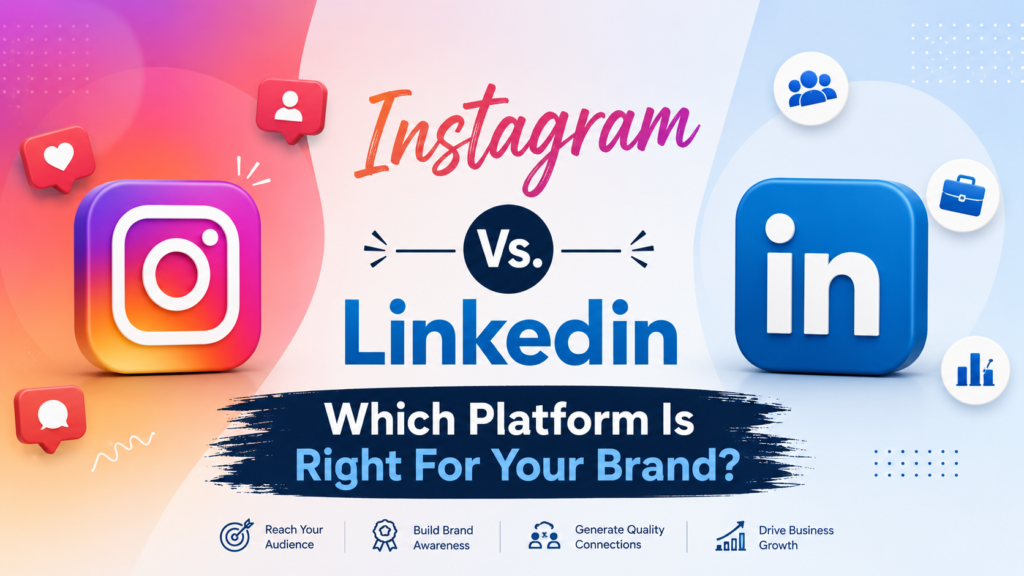
Instagram Vs. Linkedin: Which Platform Is Right For Your Brand?
In today’s digital marketing landscape, choosing the right social media platform can significantly influence a brand’s visibility, engagement, and overall growth. Businesses often face a common dilemma: should they focus on Instagram or LinkedIn? Both platforms are powerful marketing channels, but they serve different purposes and audiences. Understanding their unique strengths can help businesses decide where to invest their time and marketing resources.
This blog explores the differences between Instagram and LinkedIn, their advantages, and how brands can determine which platform aligns best with their goals.
Understanding Instagram as a Marketing Platform
Instagram is a highly visual social media platform designed for sharing photos, videos, stories, and short-form content. It has become one of the most popular platforms for brands looking to build strong visual identities and engage directly with consumers.
The platform is particularly effective for businesses that rely on visual storytelling. Industries such as fashion, travel, food, fitness, beauty, and lifestyle thrive on Instagram because they can showcase products and experiences through attractive visuals.
One of Instagram’s biggest strengths is its ability to create emotional connections with audiences. Through reels, stories, and posts, brands can display their personality, culture, and creativity in ways that resonate with users.
Key Advantages Of Instagram For Brands
1. High Engagement Rates
Instagram is known for its strong engagement levels compared to many other social platforms. Users frequently like, comment, and share content, which helps brands build loyal communities.
2. Visual Branding Opportunities
Because the platform is image and video-focused, businesses can highlight products, services, and brand aesthetics more effectively.
3. Influencer Marketing Opportunities
Instagram is a hub for influencer collaborations. Brands often partner with creators who already have loyal audiences, making it easier to promote products and services authentically.
4. E-commerce Integration
Instagram offers features like product tagging and shopping tools, allowing users to purchase products directly from posts or stories.
Understanding Linkedin As A Marketing Platform
LinkedIn is primarily a professional networking platform designed for businesses, professionals, and industry leaders. Unlike Instagram, LinkedIn focuses on professional development, industry discussions, recruitment, and business growth.
Brands that want to position themselves as industry authorities often use LinkedIn to share insights, thought leadership content, and business updates.
It is especially valuable for companies operating in B2B industries such as technology, consulting, finance, marketing services, and corporate training.
Key Advantages Of Linkedin For Brands
1. Professional Audience
LinkedIn attracts decision-makers, business owners, executives, and professionals. This makes it an ideal platform for brands targeting corporate clients or industry professionals.
2. B2B Lead Generation
Many businesses use LinkedIn to generate high-quality leads. The platform allows brands to connect with potential clients, partners, and investors directly.
3. Thought Leadership Opportunities
Companies and professionals can share articles, insights, and industry trends to establish authority in their field.
4. Recruitment and Employer Branding
LinkedIn is one of the best platforms for talent acquisition. Companies often use it to showcase workplace culture and attract skilled professionals.
Audience Differences Between Instagram And Linkedin
One of the biggest differences between the two platforms lies in their audiences.
Instagram’s audience primarily consists of younger users who consume entertainment, lifestyle content, and visually engaging posts. Many users follow brands for inspiration, product discovery, and entertainment.
LinkedIn’s audience, on the other hand, is more focused on professional growth, networking, and industry insights. Users visit the platform to learn, connect, and explore career opportunities.
Because of this difference, the type of content that performs well on each platform varies significantly.
Content Strategy Comparison
To succeed on any social media platform, brands must tailor their content to the platform’s culture and audience expectations.
Content That Works Well on Instagram
Instagram thrives on creativity and visual storytelling. Brands often post:
- Product photos and lifestyle images
- Behind-the-scenes content
- Short-form videos and reels
- Influencer collaborations
- Interactive stories and polls
Content that is visually appealing, entertaining, and easy to consume tends to perform best on Instagram.
Content That Works Well on LinkedIn
LinkedIn favors educational and professional content. Brands typically share:
- Industry insights and reports
- Professional achievements and company milestones
- Thought leadership articles
- Case studies and success stories
- Career advice and workplace discussions
Content that provides value, knowledge, or professional inspiration performs best on LinkedIn.
BRAND GOALS AND PLATFORM SELECTION
Choosing between Instagram and LinkedIn often depends on a brand’s marketing objectives.
Choose Instagram If Your Goal Is:
- Building brand awareness through visual content
- Reaching younger or consumer-focused audiences
- Promoting lifestyle products or services
- Running influencer marketing campaigns
- Driving engagement through creative content
Instagram works best for brands that want to build emotional connections with consumers and showcase their products visually.
Choose LinkedIn If Your Goal Is:
- Building authority in a professional industry
- Generating B2B leads
- Networking with decision-makers
- Recruiting talent
- Sharing business insights and expertise
LinkedIn is the better option for businesses that focus on professional relationships and corporate clients.
Advertising Opportunities On Both Platforms
Both platforms offer powerful advertising tools, but they serve different purposes.
Instagram ads are typically used for brand awareness, product promotion, and e-commerce sales. These ads often rely on attractive visuals and short-form videos to capture attention.
LinkedIn ads, however, are more focused on professional targeting. Businesses can target users based on job titles, industries, company size, and professional interests. This makes LinkedIn advertising highly effective for B2B marketing campaigns.
Engagement And Relationship Building
Engagement plays a crucial role in social media marketing.
Instagram engagement is often driven by entertainment, visual appeal, and creativity. Brands interact with audiences through comments, story replies, and direct messages.
LinkedIn engagement, in contrast, revolves around discussions, professional opinions, and knowledge sharing. Comment sections often turn into conversations about industry topics and professional experiences.
Both types of engagement are valuable, but they serve different marketing objectives.
Can Brands Use Both Platforms?
In many cases, the best strategy is not choosing one platform over the other but using both strategically.
A brand might use Instagram to showcase culture, products, and brand personality, while LinkedIn can be used to share business achievements, case studies, and industry insights.
For example, a digital marketing agency could post creative campaign visuals and client highlights on Instagram while sharing marketing strategies and professional insights on LinkedIn.
Using both platforms allows brands to reach different segments of their audience and maximize their online presence.
CONCLUSION
Instagram and LinkedIn are both powerful marketing platforms, but they serve very different purposes. Instagram focuses on visual storytelling, brand personality, and consumer engagement, making it ideal for lifestyle brands and B2C businesses.
LinkedIn, on the other hand, is built for professional networking, industry discussions, and B2B marketing. It is the preferred platform for companies that want to build authority, generate business leads, and connect with professionals.
The right choice ultimately depends on a brand’s target audience, marketing goals, and content strategy. By understanding the strengths of each platform, businesses can create more effective social media strategies and reach the right audience at the right time.
When used strategically, both Instagram and LinkedIn can play an essential role in building a strong and successful digital brand presence.